

AI-Powered Healthcare: Real-Time Data Integration Explained
How streaming FHIR/HL7 and Kafka deliver sub-second AI alerts with patient matching, validation, and HIPAA controls.
Updates, guides, and insights
Showing
357 posts found for 'api'
How streaming FHIR/HL7 and Kafka deliver sub-second AI alerts with patient matching, validation, and HIPAA controls.

Shrink inputs, prevent leakage, align pipelines, and trim prompts to cut compute, storage, and token costs across ML and generative AI workflows.

Stream early and normalize text—TTS choice and deployment determine whether voice AI feels instant or clunky.

Protect uptime first: use small models, caching, batch/live separation, tool offload, metrics-based routing and failover.
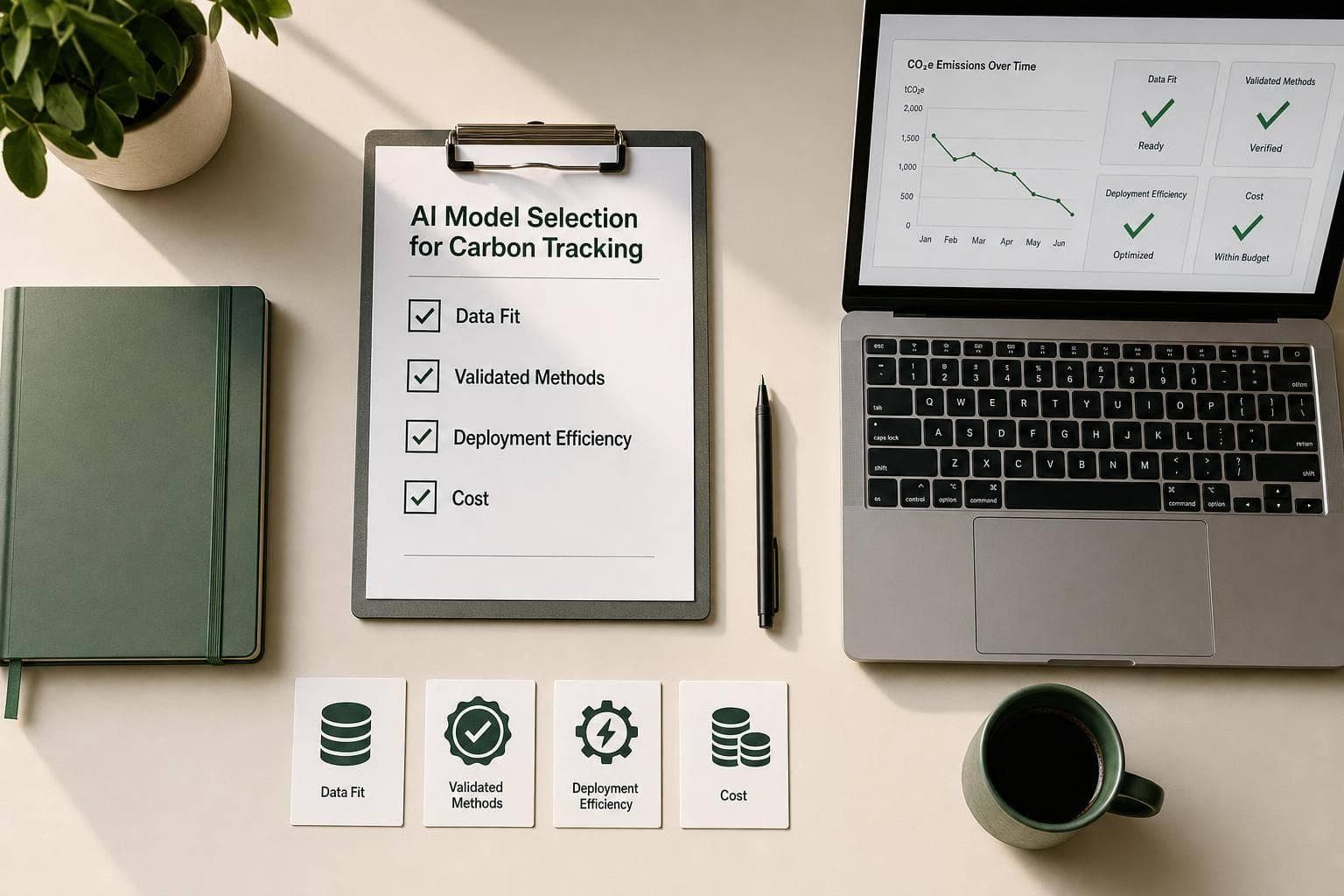
Step-by-step checklist to choose AI models for carbon tracking—prioritize data fit, validated emissions methods, deployment efficiency, and cost.

Treat mTLS as the front door: issue client certs, enforce CA trust and revocation, map cert identity to access, and test failure cases.

Measure adoption, repeat use, model performance, and business impact to turn feature usage into actionable predictions.

Use Kubeflow on Kubernetes to build reproducible ML pipelines, serve models with KServe, autoscale, and lower costs.

Practical checklist to design, log, secure, and monitor AI image audit trails for compliance, integrity, and privacy.

Clamp gradient norms to prevent exploding gradients in RNNs — practical clipping-by-norm advice, implementation tips, and tuning guidance.