

Memory Efficiency in LLMs: Study Summary
How context length, KV-cache growth, and attention choices trade memory, latency, and recall in LLMs—practical fixes for local setups.
Updates, guides, and insights
Showing
218 posts found for 'pricing'
How context length, KV-cache growth, and attention choices trade memory, latency, and recall in LLMs—practical fixes for local setups.
Celeris 1 uses diffusion-based text generation for short tasks. See its provider-reported speed results, benchmark caveats, NanoGPT limits, pricing, and a small API test.
We tested Ling 3.0 Flash and Ling 3.0 Flash Thinking on coding, extraction, tool use, counting, and logic. See where their results differed and what Thinking cost.
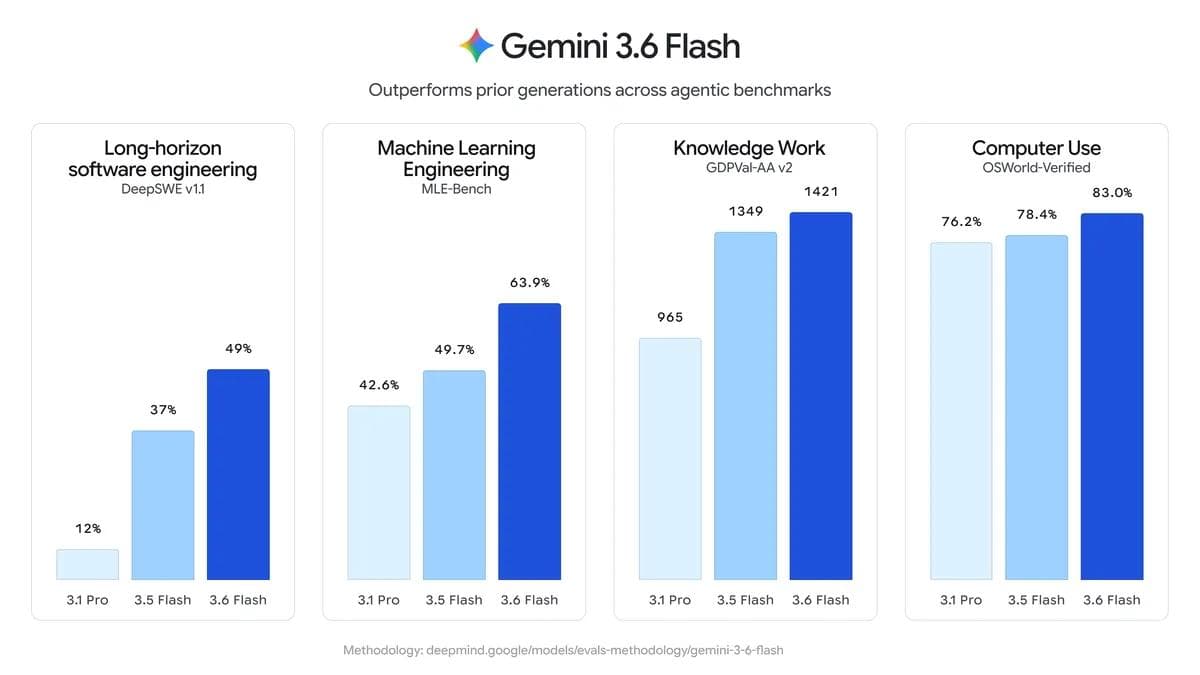
Compare Gemini 3.6 Flash and Gemini 3.5 Flash Lite on benchmarks, speed, pricing, context, coding, research, and high-volume work.
See how Poolside Laguna S 2.1 performs on coding and agent benchmarks, what Thinking mode adds, what it costs, and which version to use.
Qwen3.8 Max Preview is available before its benchmark table. Here is what is confirmed, what remains unverified, and how to compare it fairly with Qwen3.7 Max.
Compare Doubao Seed Character, Aion 3.0, and Aion 3.0 Mini for character chat, roleplay, long-form storytelling, image input, and price.
Use your own recent NanoGPT usage to compare AI model costs, understand what the estimates mean, and decide whether a cheaper model is worth testing.
Compare Linkup, Brave, Tavily, Exa, Kagi, Perplexity, Valyu, Sofya, and Firecrawl by cost, search depth, page content, filters, and best use case.
Muse Spark 1.1 brings strong coding results, a 1M-token context window, and inexpensive cached input. Here is where Meta's new model stands out—and where it still falls short.