
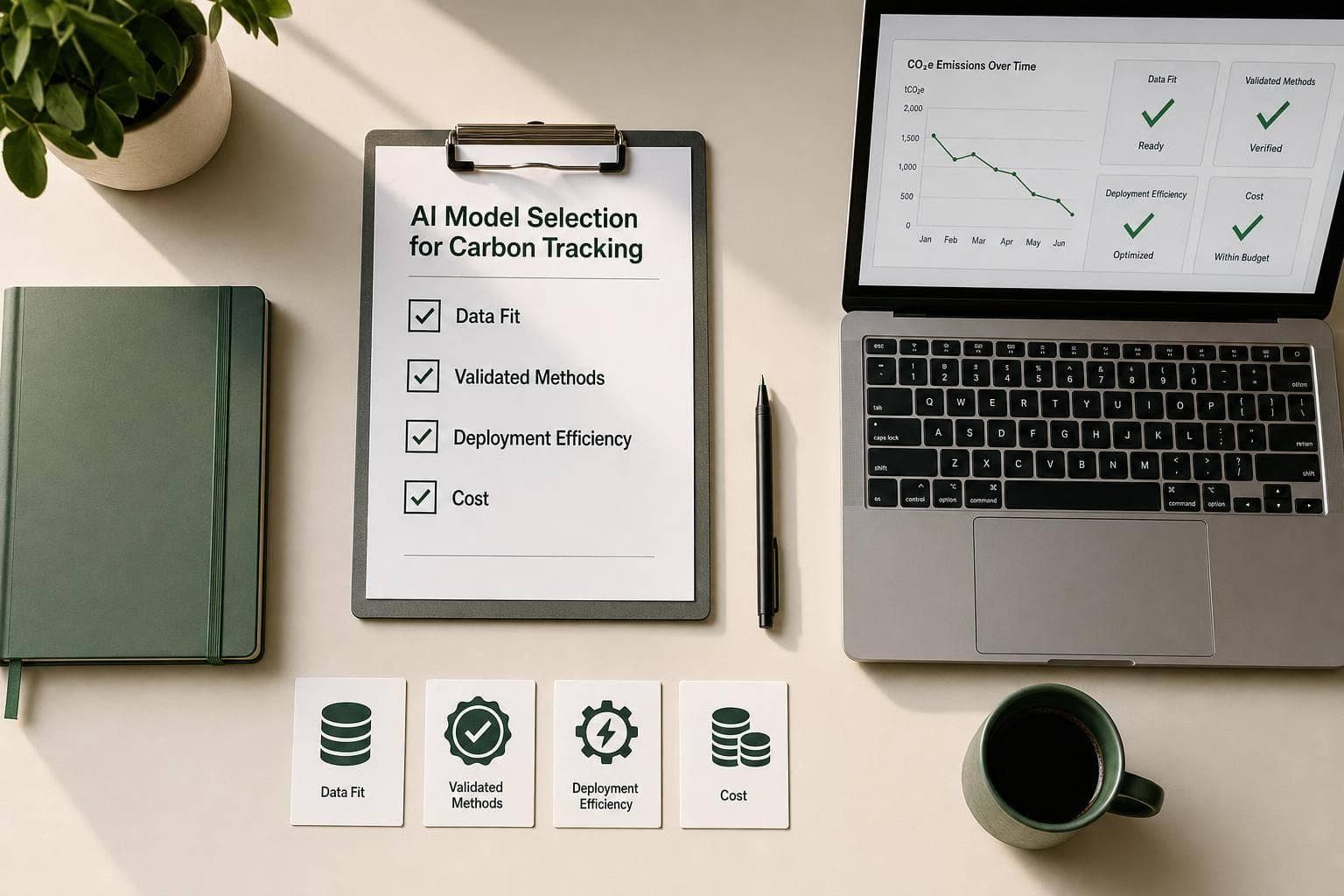
Checklist for Choosing AI Models for Carbon Tracking
Step-by-step checklist to choose AI models for carbon tracking—prioritize data fit, validated emissions methods, deployment efficiency, and cost.
Updates, guides, and insights
Showing
218 posts found for 'pricing'
Step-by-step checklist to choose AI models for carbon tracking—prioritize data fit, validated emissions methods, deployment efficiency, and cost.

ML forecasting and optimization cut energy use in data centers, grids, buildings, and industry while noting data and deployment limits.
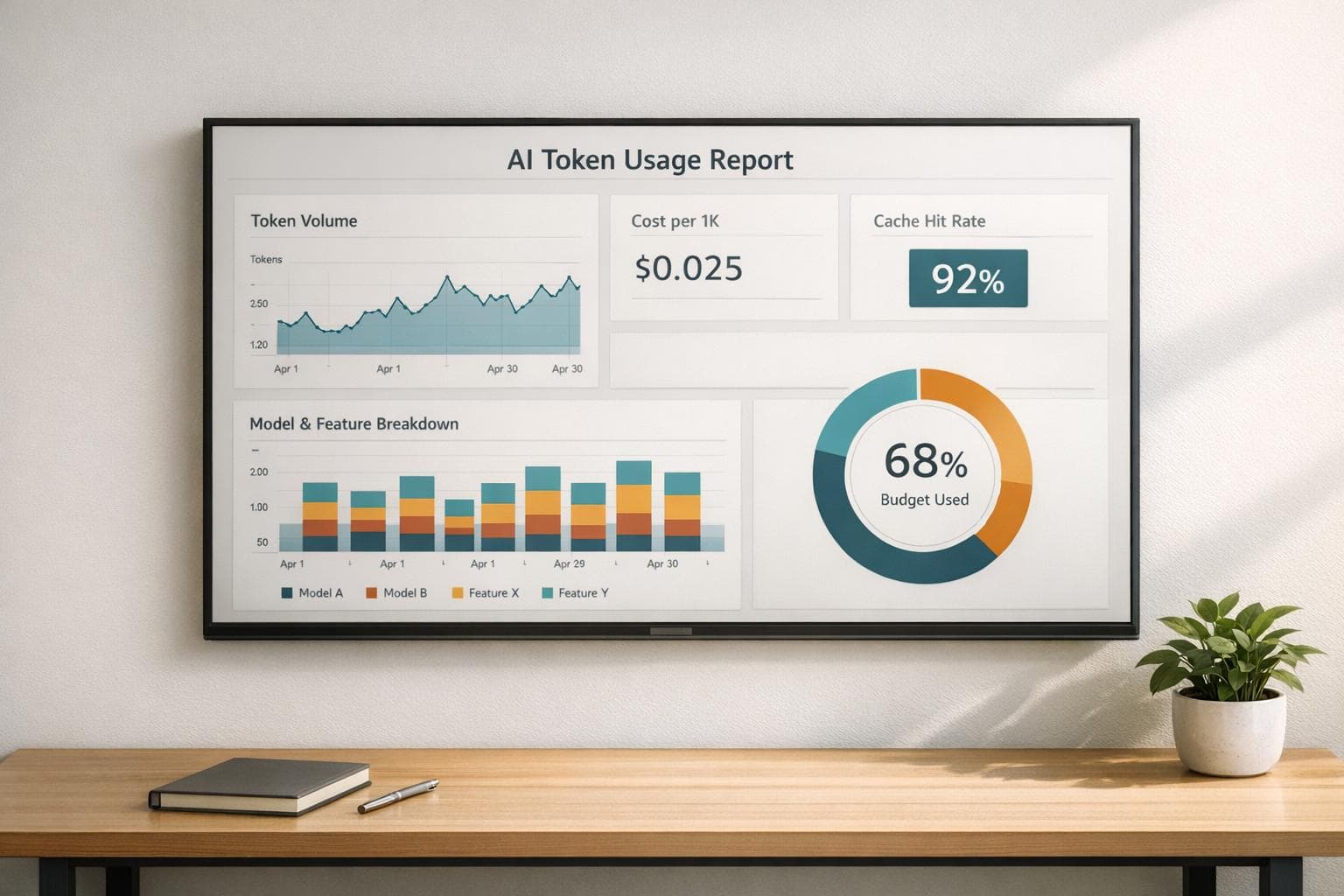
Build clear AI token usage reports with token volume, cost per 1K, model/feature breakdowns, cache hit rates, and budgeting.

Run AI models locally for privacy, lower latency, and cloud-free performance — hardware, quantization, GGUF formats, and tools.

Dependency conflicts break AI projects—use pinning, Conda/Mamba, AI debuggers, and unified model APIs to prevent GPU and runtime failures.

Compare local, cloud, and enterprise AI retention options, risks, and best practices for regulatory compliance.

Essential tools and lesson strategies to teach students how to detect AI-generated misinformation and deepfakes.

Clear, practical steps to identify, document, and report AI-generated deepfakes, copyright abuse, and nonconsensual content.

Compare OAuth 2.0 and OpenID Connect for AI platforms: OAuth handles authorization; OIDC provides authentication for secure agents and APIs.

One AI fuels creative lesson design; the other streamlines research and Google Workspace workflows.