

Federated Learning Algorithms for Image Privacy
Federated image training forces trade-offs between privacy, image quality, and system cost; algorithm choice determines the balance.
Updates, guides, and insights
Showing
Federated image training forces trade-offs between privacy, image quality, and system cost; algorithm choice determines the balance.

Workload-based AI server refresh: training 1–3 yrs, inference 3–7 yrs. Replace when utilization, failure risk, power, or support justify it.

Match sparse formats (COO/CSR/CSC) to solver and hardware to cut memory, speed SpMV-heavy solvers, and simplify assembly.

Choose dataset types, separate transforms, tune DataLoader settings, and save metadata to avoid GPU stalls and ensure reproducible runs.
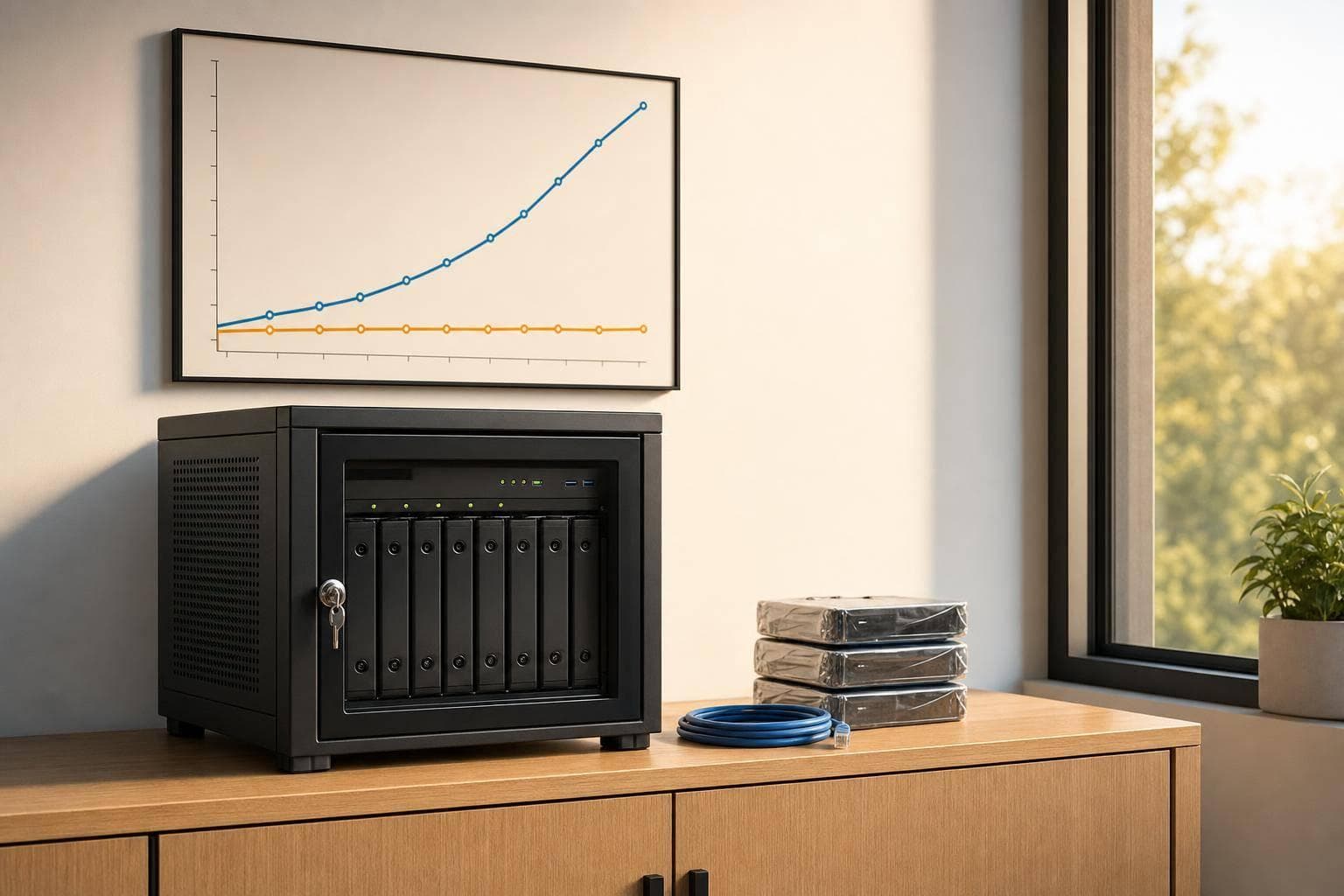
Cloud looks cheap on day one, but local storage often wins for long-term multi‑TB AI retention — lower costs, faster access, more privacy.

Prefer SSE for one-way token streams and WebSockets for bidirectional control; use reactive Java (Flux/Multi), batch tokens, and keep keys server-side.

How streaming FHIR/HL7 and Kafka deliver sub-second AI alerts with patient matching, validation, and HIPAA controls.

Use hashes, signatures, C2PA and blockchain anchors to prove AI content origin and integrity—provenance, not factual truth.

Shrink inputs, prevent leakage, align pipelines, and trim prompts to cut compute, storage, and token costs across ML and generative AI workflows.

Stream early and normalize text—TTS choice and deployment determine whether voice AI feels instant or clunky.